
Introduction
These days, building a brand isn’t just about designing a logo and moving on. It’s more… layered than that. People don’t just see your brand—they feel something about it, almost instantly. And a big part of that feeling? Colour.
The right colour scheme can say a lot without saying anything at all. It can make your brand feel bold, calm, premium, playful—whatever you’re aiming for. In this guide on top colour schemes for brands with HEX codes, we’ll break down how colours shape identity and why getting those exact shades right actually matters more than most people think.
I mean, think about it—when you see that bright red, you probably think of Coca-Cola without even trying. Or that clean white and minimal look… Apple just pops into your head. That’s not random. That’s intentional.
So yeah, let’s figure out how you can build that kind of recognition for your own brand.
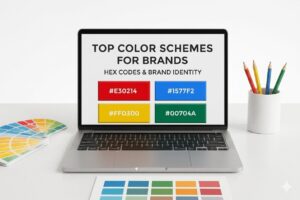
Why Colour Matters in Brand Identity
Colours kind of… speak before words do. Like, you land on a website, and within seconds you already have a feeling about it—trustworthy, exciting, boring, premium… something. A lot of that comes from colour.
There’s even research suggesting that most first impressions—like up to 90%—are influenced by colour alone. Sounds a bit extreme, but when you think about it, it makes sense.
The Psychology Behind Colours
Different colours tend to trigger different emotions. Not always perfectly, but often enough that brands rely on it.
Red feels energetic, urgent… a bit intense (Coca-Cola, YouTube)
Blue feels safe, calm, reliable (Facebook, PayPal)
Yellow feels bright and friendly (McDonald’s, IKEA)
Green feels fresh, natural (Starbucks, Spotify)
Black feels strong, premium, a little serious (Chanel, Nike)
There’s this quote by Paul Rand that fits well here—“Design is the silent ambassador of your brand.” And honestly, colour does most of that silent talking.
Top Colour Schemes for Brands (with HEX Codes)
Let’s go through some combinations that just… work. You’ve probably seen them everywhere, even if you didn’t notice.
1 Red and white: Bold and energetic
Great for brands looking for attention. Fast.
Red: #E50914
White: #FFF
This combo sounds loud in a good way. The red grabs you immediately, and the white kind of balances it out so it doesn’t feel overpowering. Great for entertainment or fast moving brands.
2. Blue + White: Reliable & Clean
Good for tech, finance, or anything where credibility counts.
#1877F2 Blue
White: #FFFFFF
Blue has that “we’ve got your back” feel. Put it with white and suddenly everything looks clean and professional. That’s why you see so many corporate brands doing that.
3. Minimal & Premium: Black + Gold
Best for luxury or high-end placement.
black #000000
Gold: #E6BE8A
This one feels expensive… even if the product is not. Black brings in depth, gold brings in that touch of exclusivity. Together they just feel… elevated.
4. Fresh & Natural: Green + White
Best for eco, health and wellness brands.
Green: #00704A
White #FFFFFF
Green is the colour of nature. Feels calm and fresh, like something clean or organic. Add white and it keeps things simple and airy.
5. Creative & Playful: Yellow + Black
Best for brands looking to reach younger or creative audiences.
Yellow: #FFD300
Black: #000000
Yellow is energy, black is structure. It’s loud, it’s striking, it’s hard to miss. You’ll see this combo a lot in creative or tech-forward spaces.
6. Cool & Modern: Blue & Grey
Perfect for SaaS, tech platforms, professional services.
Blue: #0072C6
Grey: #666666
This one seems pretty even. Blue is trust, grey is down to earth. It’s modern without being overdone.
7. Soft and Elegant: Pink + White
It works best for brands in beauty, fashion and lifestyle.
Pink: #E91E63
White: #FFFFFF
Pink adds warmth and character. And when you combine it with white, it doesn’t feel overpowering, it remains soft, approachable.
Choosing the Right Colour Scheme
Choosing colours is about more than just what looks good… it’s more about what works.
Keep it simple:
First, consider your audience. Who you talking to? A finance app and a kids’ toy brand obviously shouldn’t feel the same.
Then, your brand personality—are you bold? calm? playful? serious?
A small tip that actually helps: the 60-30-10 rule.
Use one main colour (about 60%), a secondary one (30%), and a small accent (10%). Keeps things balanced.
Also—test your colours. Check them on mobile, desktop, dark mode. Sometimes a colour that looks perfect on your laptop looks completely off on a phone. Happens more often than you’d expect.
And once you finalize… stick to it. Same HEX codes, everywhere.
Colour Consistency (This Part Is Often Ignored)
Here’s where a lot of brands mess up.
They pick a colour… and then use slightly different versions of it everywhere. Website looks one way, social media another, packaging something else.
That inconsistency slowly weakens your brand.
Using exact HEX codes fixes that. It keeps everything aligned. That’s why brands like Starbucks can use the same green (#00704A) globally and still feel consistent.
If you can, document your colours somewhere—like a simple style guide. Future you (or your team) will really appreciate that.
Quick Tip: Try Colour Tools
If you’re not sure where to start, just play around a bit.
Tools like Coolors or Adobe Color make it easy to experiment. You tweak one colour, and they suggest combinations. It’s actually kind of fun… and surprisingly helpful when you’re stuck.
Conclusion
At the end of the day, your brand colours are more than decoration. They’re your visual voice.
Used consistently, the right mix can build trust, create emotion and make your brand recognisable even without a logo. That’s powerful.
Go bold in red, calm in blue, premium in black and gold… just make sure it suits your story.
Because once your colours start to speak loud and clear, people start to remember. And that really is the goal.